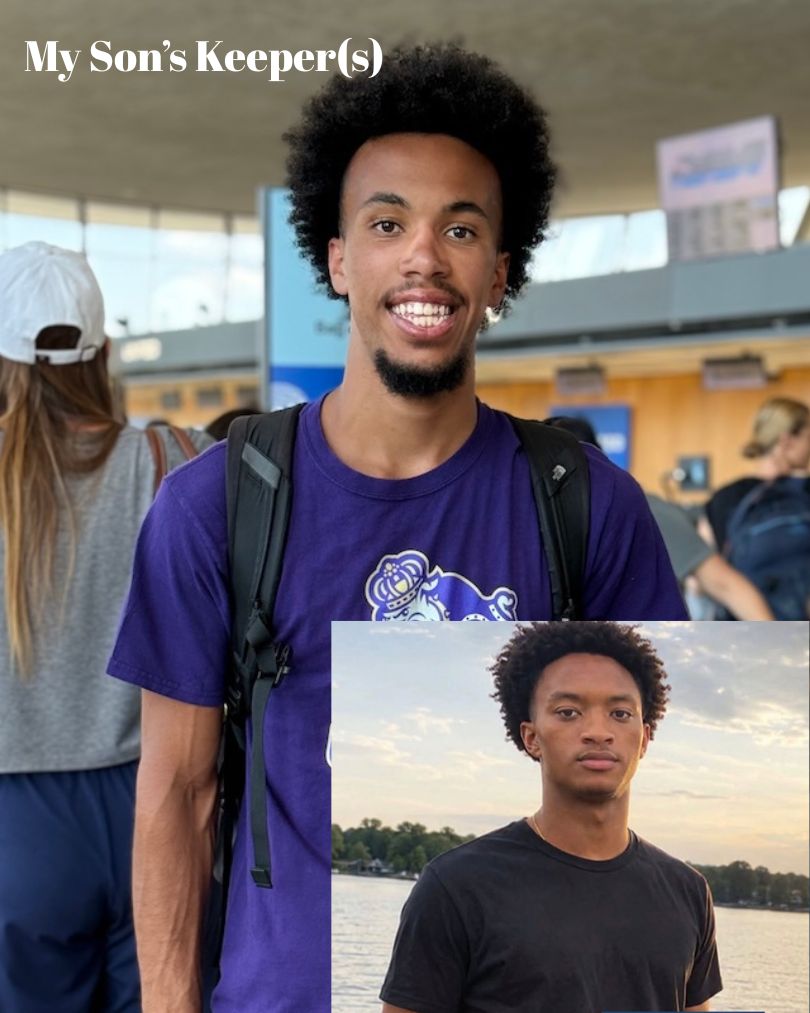
It’s been almost 2 weeks since, Nolan Wells, the 18-year old Black boy who went boating with a group of white friends in Mississippi, was found dead.
Exactly what happened is still unknown. Was there an accident? A coverup? A murder? The investigation is still ongoing, but one thing is known: The three white ‘friends’ who Nolan went out to the island with came home without him. They left him behind.
This story breaks my heart for so many reason — the biggest being that Nolan Wells reminds me so much of O. They were close in age. Had the same build and a similar complexion. Played the same sport, even the same position.


And most importantly, because they were (are) the only Black kid in their friend group.


There’s also another similarity I keep coming back to … O’s (white) friends once left him behind, too.
Like Nolan, O went to a party a few months ago with a group, and that group abandoned him. Unlike Nolan, however, O made it home safely.
Before you come at me, I’m not saying his friends did it maliciously. I’m also not saying his friends are racist.
All I know is they left my son, then a 19-year old Black kid, in a predominantly white area (in the South, no less) without any regard for his safety … And that’s a problem.
If you don’t have nonwhite kids, you can’t relate to the very real, underlying fear parents of Black and brown children have when their child is ‘the token Black kid’ in the friend group. It’s a deep-seated concern that, in that group dynamic, our child will be safe. Will be protected. Will make it home alive and unharmed.
I get that all parents have some level of concern for their children’s safety when not with them. But it’s different for parents of Black and brown kids. History has proven this, time and time again. If you think this is hyperbole, here are just a few recent examples showcasing the dangers of being the ‘token Black friend’:


This is going to ruffle some white feathers, but it needs to be said: Being friends with a Black or brown person doesn’t automatically make you anti-racist. Proximity doesn’t automatically make you a ‘safe’ person. You need to prove you are those things through your actions.
White children need to be taught how to recognize bias in themselves and others. How to have compassion and curiosity about their Black and brown friends’ reality, living in predominantly white areas. How to stand up for their Black and brown friends when faced with discrimination or hate, and care enough to be responsible for their wellbeing when needed.
Not all white people are racist, but all white people need to do better. Need to be better. My children’s lives — and my husband’s, nieces’, nephews’, and in-laws’ lives — depend on it.

—LJDT
P.S. Here are some great resources to get you started on your road to anti-racism:
- Who Is Responsible For My Son? — essay by Quinnee Zimmerman
- How To Be An Antiracist — book by Ibram X. Kendi
- Between The World And Me — book by Ta-Nehisi Coates
- Me And White Supremacy — book by Layla F. Saad
And if you want a glimpse into real-life experiences I’ve written about, read this blog I posted last year for a personal account: https://midlifemoxieandmuscle.com/raising-h-o/ or this one from 2022: https://midlifemoxieandmuscle.com/dwb-what-they-dont-teach-in-drivers-ed/


